
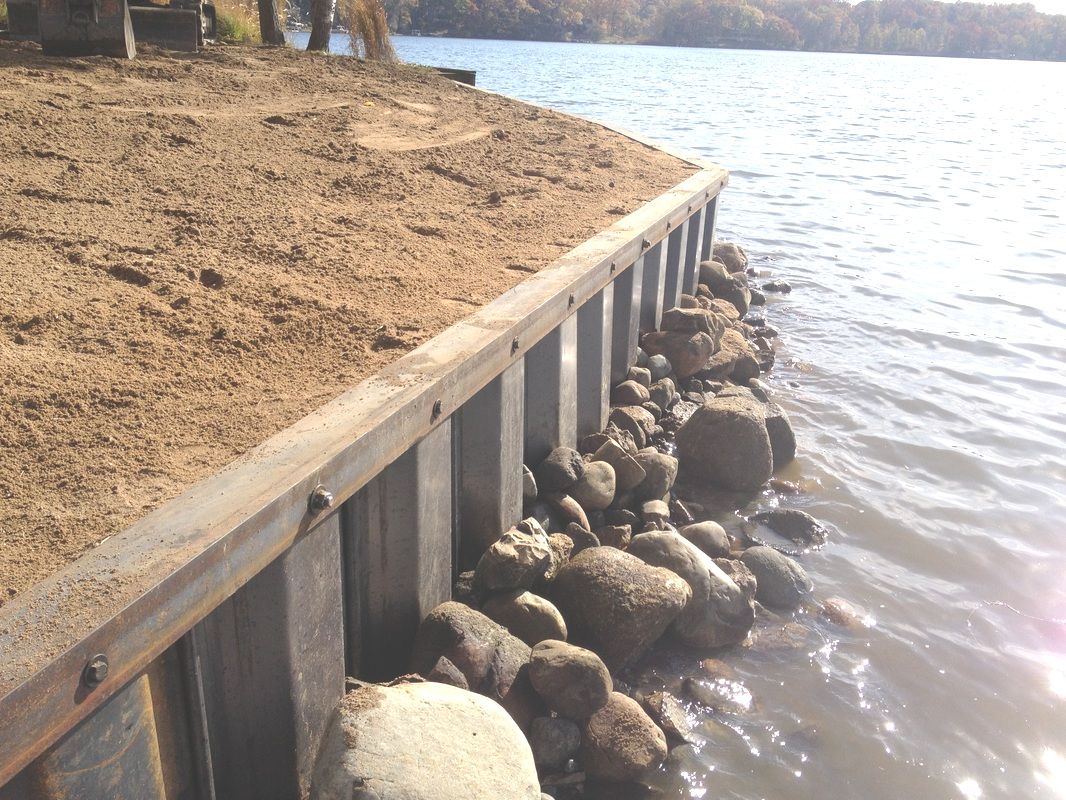
Plain Steel Seawall
|
Steel SeawallsPlain steel seawalls are constructed with non-coated bare steel sheet piling, angle iron capping and plain finish hardware. Steel seawalls have a very long service life and they are the most economical choice when considering a seawall to protect your shoreline. Plain steel seawalls are also the best option where heavy ice pressure is present, and a heavy duty wall is required. The wall will turn to a rusted brown color over time and can be painted if desired. Life expectancy of a plain steel wall using 8 gauge material is 25+ years.
|

Galvanized Steel Seawall
|
Galvanized Steel SeawallsGalvanized seawalls are constructed using pre-galvanized coated sheetpiling, and hot dipped galvanized angle iron capping & hardware. Galvanized walls, like plain steel seawalls are the best option for heavy duty applications. Galvanized seawalls provide an even longer expected life span due to the galvanized coating. Galvanized Seawalls will eventually turn a dull gray color. Both Galvanized and Plain Steel seawalls are an excellent choice in almost every condition. Their strength is unparalleled, they provide maximum protection against erosion, and they are virtually maintenance free!
|
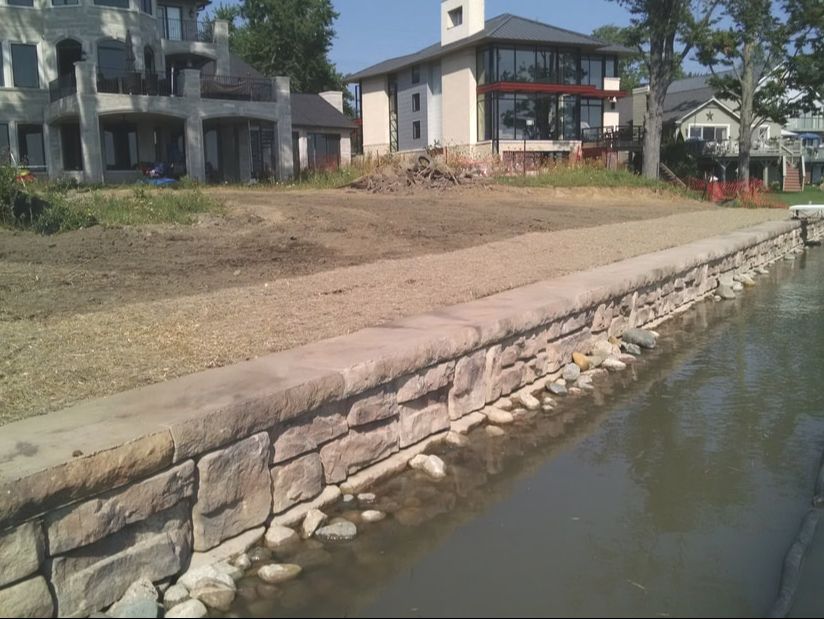
Redi-Rock LedgeStone Seawall
|
Redi-Rock SeawallsRedi-Rock seawalls are stackable, interlocking concrete blocks with a variety of decorative face options and limitless design elements. The stones are massive in size, weighing 2000+ lbs. each. Redi-Rock Seawalls look just like natural quarried stone and are engineered to providing exceptional strength. The Redi-Rock wall is an eco-friendly recyclable product and requires zero maintenance. Redi-Rock seawalls are constructed with a geo textile filter fabric installed behind and under the stone with gravel base and fill.
|
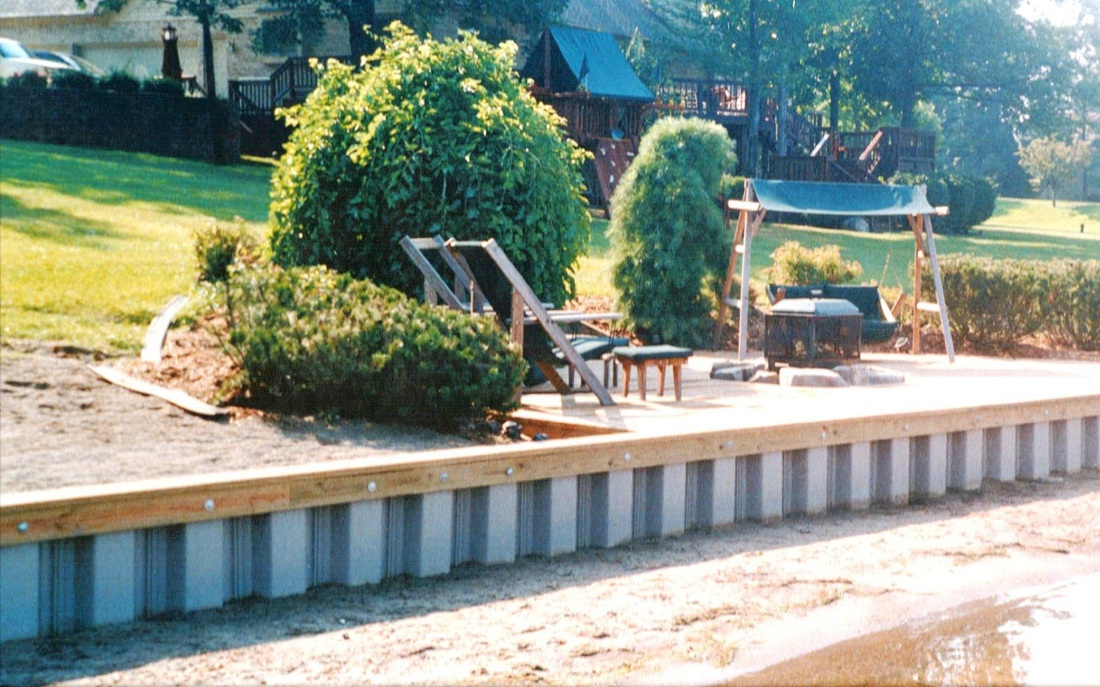 Vinyl Seawall with Wood Cap and Deck |
Vinyl SeawallsA vinyl seawall can be a good choice for light ice pressure areas such as smaller lakes and ponds, or protected bays that are shielded from ice pressure and ice movement. Vinyl sheeting manufacturers offer "lifetime" warranties for their sheeting to not rust, rot or crack. Please be aware that their are many more components to a vinyl seawall than just the "plastic" sheeting. Vinyl seawalls require a lumber frame system not only to aid in the drivability of the sheeting but also to add strength to the wall. A properly designed vinyl seawall with a well built frame system will provide years of protection to your shoreline but require maintenance to the structural wood components over time.
|
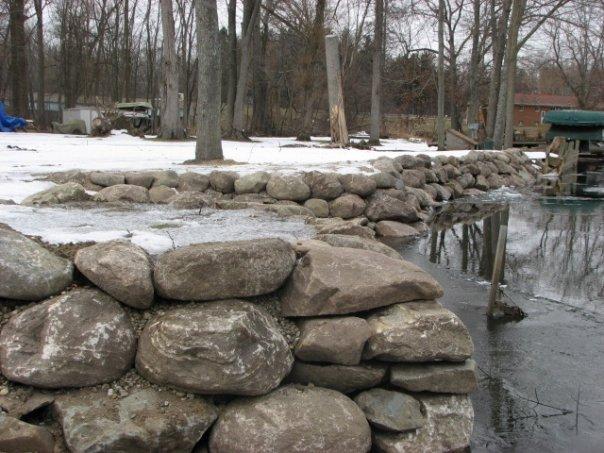 Boulder Seawall |
Boulder SeawallsBoulder seawalls create a beautiful and natural look, while protecting the shore. Installation of a geo-textile filter fabric behind the boulders is imperative in the construction of boulder seawalls. Boulder seawalls require an artistic approach by skilled craftsman. We carefully select and place each boulder to lock together to create a natural looking yet balanced and strong wall. Boulder seawalls are a great investment, however expect heavy machinery and extensive excavation to the property to construct this type of wall properly. Large Boulders are required for seawalls applications to prevent movement from ice. Manufacturers warranty …a billion years!
|
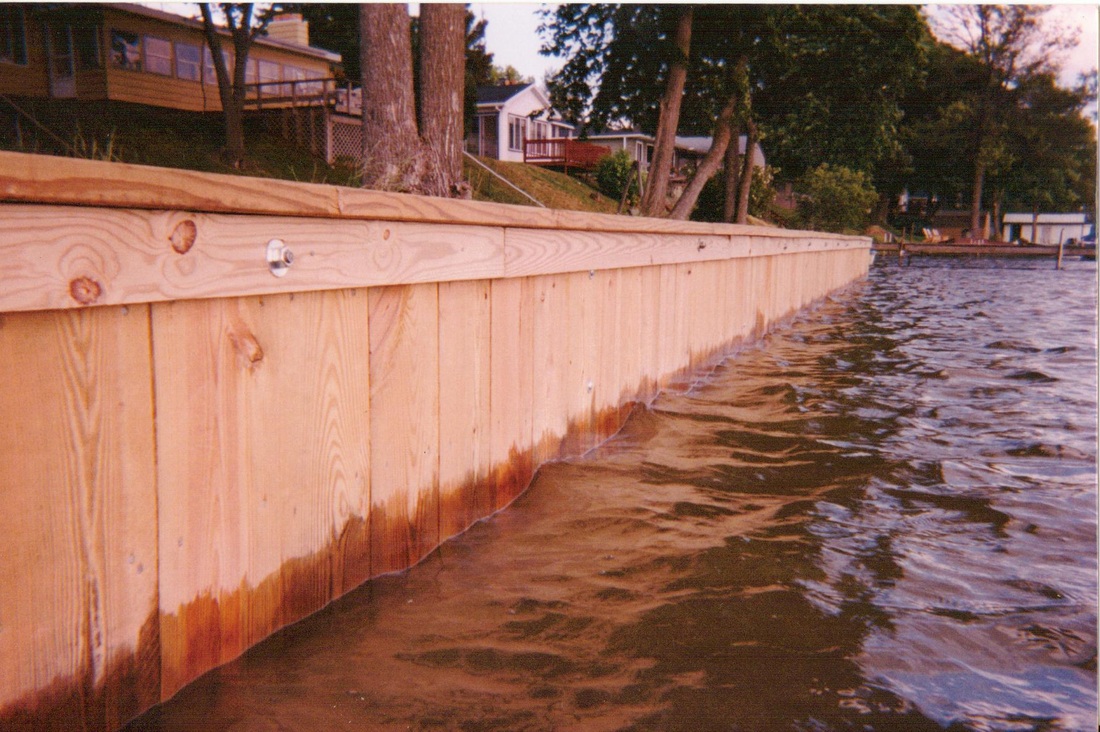 Tongue & Groove Wood Seawall |
Wood SeawallsWood walls can be an attractive enhancement to your shoreline property, providing a "nautical" look with relatively low material costs. There are some variations of which type of wood wall you could choose. A Post & Plank wall consists of vertical posts installed with tongue & groove lumber positioned behind the posts horizontally. A post & plank wall will give you adequate erosion protection for years with relatively low maintenance. The major draw back on a post & plank style wall is that the horizontal boards are only typically installed a few courses under the lake bottom, and loss of fill can occur from undertow washout and pesky muskrats burrowing under the wall. Another approach would be the Vertical Wood seawall, as seen in the photo. Tongue and groove treated lumber planks are driven into the lake bottom vertically, in front of a structural frame. This creates a clean face with the advantage of more material driven into the ground.
|
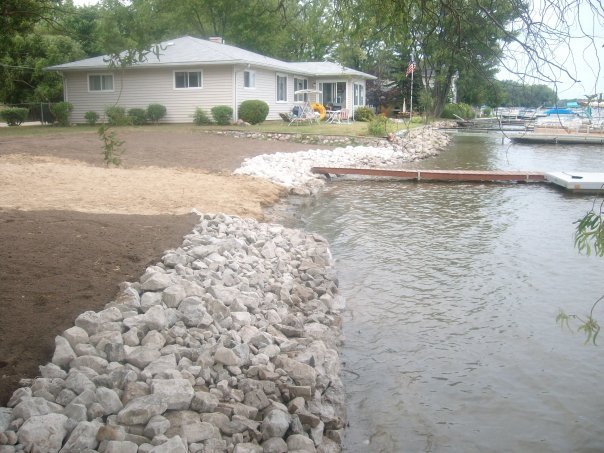 Rip Rap Armored Shore |
Rip Rap Shore ProtectionRip Rap is a term used to describe smaller stone that is piled onto a shoreline to protect the shore from erosion. A Riprap wall requires preparation to the grade of the shore, and should have a geotextile lining to prevent wash out and erosion to occur between the stones. Rip rap armament can be made up of any type of rock. We like to use a 6"-8"+ angular type stone that locks together due to the jagged and irregular edges. A riprap wall provides a healthy shoreline that will encourage wildlife habitat which in turn makes for a well sustained eco-system.
|
Don't Delay...Call Michigan Marine Today!
(517) 545-WALL(9255)
|
©2024 Michigan Marine Construction, LLC. All rights reserved.
|

|